
Walk down any health aisle or scroll any feed and you will be promised an “immunity booster”. It is a comforting phrase, but it rests on a misunderstanding of how your immune system actually works, and once you see the problem you will never read the word the same way again. You do not, in fact, want your immune system boosted. An over-active immune system is not health — it is allergy, it is inflammation, and at its worst it is autoimmune disease, where the body attacks itself. What you want is an immune system that is well regulated: quick to respond to real threats and calm when there is none. That is modulation, and it is a very different goal from stimulation.
How beta-glucan actually works
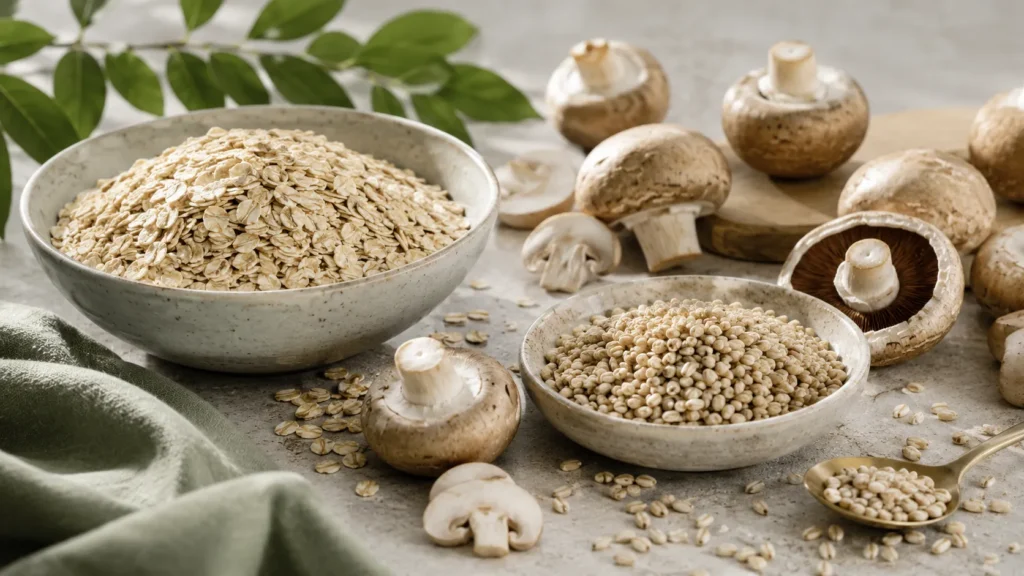
Beta-glucans are natural fibres found in the cell walls of yeast, certain mushrooms, and grains such as oats and barley. The specific forms studied for immune activity, particularly beta-1,3/1,6-glucans from yeast, have a shape your immune system recognises. Your innate immune cells — the fast-acting first responders such as macrophages and neutrophils — carry receptors, including one named Dectin-1, that are tuned to detect exactly these glucan structures, because they resemble the surfaces of microbes.
When beta-glucan binds these receptors, it does not simply flip the immune system to maximum. Instead, it appears to prime or “train” these innate cells, leaving them better prepared to respond appropriately when a genuine threat arrives. This concept, sometimes called trained immunity, is closer to keeping a fire brigade alert and well-drilled than to setting off every alarm in the building at once. The distinction is everything. A stimulated immune system pours out inflammation regardless of need. A modulated one responds proportionately. Beta-glucan is interesting precisely because it belongs to the second category — it is understood to support balance and readiness, not blanket over-activation.
It helps to see why “more immunity” is the wrong goal in the first place. Your immune system is not a dial where higher is always better; it is a balance between responding to real threats and tolerating everything harmless — your own tissues, the food you eat, the friendly microbes on your skin and in your gut. When that balance tips towards over-activity, the result is not superior protection but allergy, chronic inflammation, or autoimmune disease, where the system attacks the body it is meant to defend. A well-regulated immune system, then, is one that stays quiet when it should and acts decisively when it must. Anything described as a “booster” is, if taken literally, promising to push a finely balanced system in one direction only — which is not something a thoughtful person actually wants.
What the evidence supports
Beta-glucan is among the better-studied immune-support ingredients, and the more encouraging human research has looked at whether regular intake is associated with fewer or milder upper respiratory tract infections, especially in people under physical stress. The evidence is best described as promising rather than settled, and effects tend to appear with consistent daily use over weeks rather than from a single dose. Our Incremune Syrup is built around beta-glucan alongside other immune actives, designed for this modulating, supportive role rather than for the mythical “boost”.
One useful piece of nuance is that not all beta-glucans behave the same way, and the source matters. The soluble beta-glucans found in oats and barley are best known for a different job — helping to manage cholesterol as part of a healthy diet — while the particulate beta-1,3/1,6-glucans from yeast and certain mushrooms are the forms most studied for the immune-training effect described above. They share a family name but are not interchangeable, which is why a product’s source and structure tell you more than the words “beta-glucan” on the front of the pack. As with most things in this field, the specifics — which glucan, from where, at what dose, taken how consistently — decide whether you are likely to see any effect at all, and honest labelling is the first thing worth looking for.
What it will not do
Beta-glucan will not make you immune to infection, and it will not guarantee you never fall ill; no supplement can promise that. It is not a treatment for an active infection, and it is not a substitute for vaccination, which trains your immune system against specific threats in a way no general supplement can. If you have an autoimmune condition, or you take medicines that deliberately suppress your immune system, the idea of nudging immune activity needs a doctor’s input first, because in that setting more immune activity is not what you want. And it works with, not instead of, the basics — sleep, nutrition and hygiene still do most of the work.
A practical next step
Think of immune support as a system rather than a single product. Prioritise sleep, a diet with enough protein and a range of plants, physical activity, and sensible hygiene, and let a modulating ingredient like beta-glucan sit on top of that as steady, daily support rather than a rescue remedy. If you are immunocompromised, on immune-suppressing medication, or managing an autoimmune condition, talk to your doctor before adding any immune-active supplement. And be sceptical, always, of anything that promises to “boost” your immunity — the word itself is a sign that someone has skipped the biology.